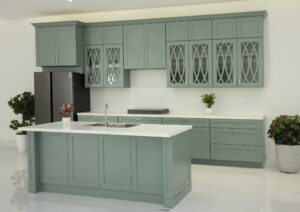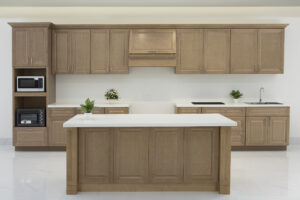

Inspiration
Budget Planning & Cost Drivers for Semi-Custom & Custom Kitchen Cabinets
Jul
Budget Planning & Cost Drivers for Semi-Custom & Custom Kitchen Cabinets
Cabinetry represents the single largest financial investment in a kitchen remodeling project, accounting for 30% to 40% of overall renovation costs. Because cabinet prices can vary widely depending on grade, core materials, finish complexity, and hardware specifications, establishing a realistic budget requires understanding key cost drivers.
Whether you are a homeowner planning a private kitchen update or a general contractor estimating a multi-unit project, this guide provides a transparent roadmap for kitchen cabinet budget planning.
1. Cabinet Grade Categories: Stock vs. Semi-Custom vs. Custom
Cabinetry is broadly categorized into three manufacturing tiers, each serving distinct budget levels and project requirements:
| Cabinet Tier | Customization Flexibility | Lead Time | Price Point Range (Per Linear Foot) |
|---|---|---|---|
| Stock RTA Cabinets | Fixed sizes in 3-inch increments | 1 to 2 Weeks | $100 – $250 / linear ft |
| Semi-Custom Cabinets | Modifiable depth/width, wide finishes | 4 to 6 Weeks | $250 – $600 / linear ft |
| Fully Custom Cabinets | Bespoke sizing, custom color matching | 8 to 12 Weeks | $600 – $1,200+ / linear ft |
2. Primary Material & Construction Cost Drivers
Box Core Substrate (Plywood vs. Particleboard)
Upgrading from standard particleboard box cores to 3/4-inch multi-ply furniture grade plywood typically adds 15% to 20% to total box cost. However, plywood’s superior water resistance and structural weight capacity make it the smartest investment for long-term ROI.
Door Material & Finish Technology
- Factory-Applied Polyurethane Paint: Multi-coat painted finishes require dust-free spray booths and sanding between coats, carrying a premium over basic melamine.
- Natural Hardwood Stains: Premium hardwoods like Walnut and White Oak command higher raw lumber costs than Maple or Birch.
3. Hardware Accessories & Internal Organizers
Internal hardware accessories enhance daily convenience but impact final pricing. Plan your hardware budget strategically:
- Standard soft-close hinges and undermount drawer slides are essential baseline features.
- Specialty mechanisms—such as Magic Corner pull-outs, tall pull-out pantries, and trash bin roll-outs—add $150 to $500 per unit. Prioritize high-use drawers for specialty pull-outs.
4. Factory-Direct B2B Pricing Advantage
Working directly with an established cabinet manufacturer like KVX eliminates middleman distributor markups. KVX delivers high-specification semi-custom and custom cabinetry built to exact project drawings at factory-direct B2B price points.
Frequently Asked Questions (FAQ)
What percentage of a kitchen budget should go to cabinets?
On average, cabinetry should account for 30% to 40% of your total kitchen remodeling budget, followed by countertops (15-20%) and appliances (15-20%).
Is semi-custom cabinetry worth the extra cost over stock cabinets?
Yes. Semi-custom cabinetry offers custom depth and width modifications, higher material grades, and far broader finish choices, allowing cabinets to fit your space precisely without wide filler gaps.
How do I save money on kitchen cabinets without sacrificing quality?
Save money by selecting standard cabinet box sizes where possible, limiting complex specialty pull-out accessories, choosing high-performance semi-custom lines over fully bespoke custom work, and sourcing factory-direct from KVX.
Get a Free Project Estimate from KVX
Planning a kitchen renovation budget? Send your floor plans or project specifications to KVX for a detailed, factory-direct quotation. Contact KVX sales team today.